a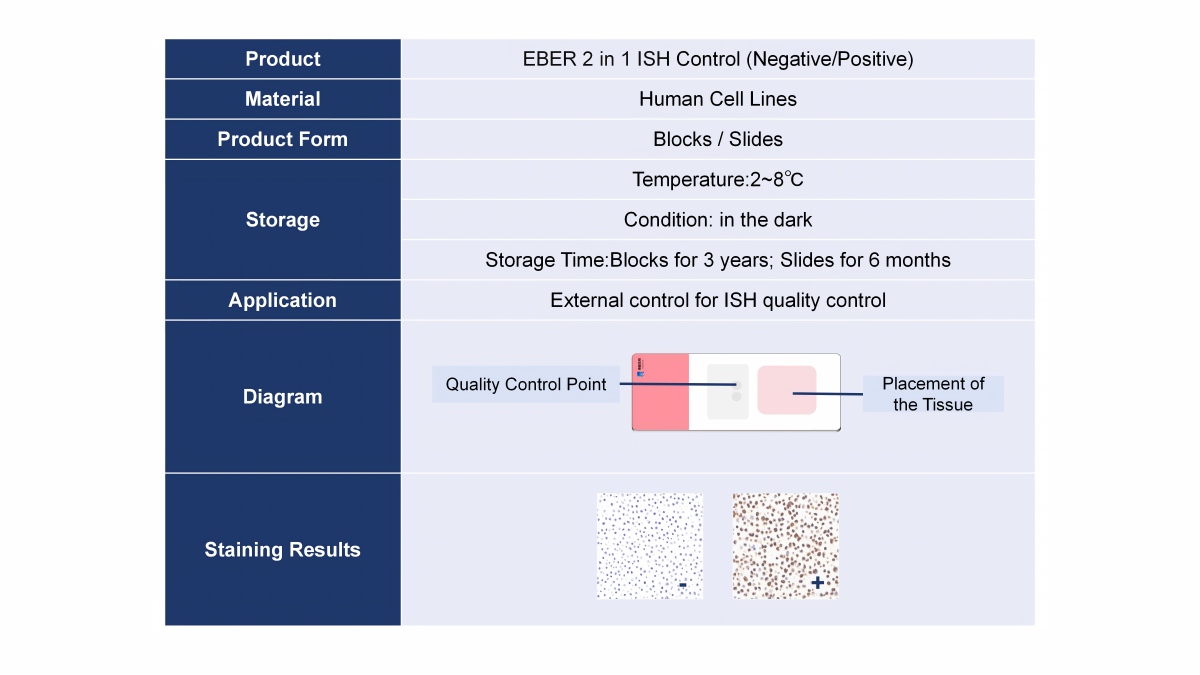
Why Should EBER Be Tested?
Epstein–Barr virus (EBV) is the causative agent of many diseases, including infectious mononucleosis (IM), and is associated with different subtypes of lymphoma, sarcoma, and carcinoma, such as Hodgkin's lymphoma, non-Hodgkin's lymphoma, nasopharyngeal carcinoma, and gastric carcinoma. The physical presence of EBV within a given neoplasm suggests that it may be implicated in the pathogenesis of clonal expansion in EBV-associated diseases. As such, EBV can serve as a biomarker to diagnose and assess tumor spread and to monitor treatment. For this reason, laboratory testing for EBV and identification of viral gene products have become essential, as EBV is considered a useful tumor marker. For histopathological lesions, in situ hybridization (ISH) of EBV-encoded RNA (EBER) in biopsy tissues remains the gold standard for detecting EBV.
The Importance of Quality Control in EBER ISH Testing
Given that ISH of EBER in biopsy tissues is the gold standard for EBV detection, obtaining an accurate EBER ISH result is important for the diagnosis of many benign or malignant diseases associated with EBV infection. Interpretation of EBER stains relies on microscopic visualization of the nuclear EBER signal in latently infected cells. Due to RNA degradation, false-negative EBER hybridization by ISH is possible; thus, control hybridization must be run in parallel to ensure that RNA is protected and available for probe binding.
References
[1]. AbuSalah MAH, Gan SH, Al-Hatamleh MAI, et al. Recent Advances in Diagnostic Approaches for Epstein-Barr Virus[J]. Pathogens. 2020 Mar 18;9(3):226.
[2]. Gulley ML. Molecular diagnosis of Epstein-Barr virus-related diseases[J]. J Mol Diagn. 2001 Feb;3(1):1-10.